The future of the U.S. workforce is undergoing significant challenges driven by factors such as an aging workforce, increasing needs in the healthcare sector, and higher employment demands posed by declining legal immigration. As the nation grapples with the existing challenges and recognizes those ahead, there is a paramount need for upskilling and reskilling the current workforce.
Addressing Workforce Challenges
The U.S. workforce is inundated with an aging population moving toward retirement, leaving gaps in various fields across several industries. Because of this, gaps may be filled by a less experienced workforce. A growth in geriatric and home healthcare needs will also be seen as this age group makes the transition. As a result of these imminent projections, healthcare finds its way at the top of the list when analyzing the projected growth of the U.S. workforce in the coming decade.
Those in the healthcare sector, and specifically those with healthcare certifications will be in highest demand in the coming years. The U.S. Chamber of Commerce points out, “…it is expected that there will be a greater demand for healthcare and pharmaceutical workers. Specifically, over one-quarter (3.3 million) of new jobs in the next seven years will be in the healthcare and social assistance sector.” However, alarming forecasts show significant shortages in critical healthcare roles, such as nurses, in more than half of U.S. states by 2026.
Projected Growth and Workforce Trends
The U.S. Bureau of Labor Statistics emphasizes these workforce trends, reporting, “The health care and social assistance sector is projected to not only grow most rapidly of any sector, but it is also projected to create about 45 percent of all the projected job gains from 2022 to 2032.” To navigate this trajectory, the U.S. Chamber says the answer lies within these two paths: leveraging legal immigration and focusing on the upskilling and reskilling of our existing workforce. Upon recognizing the role of immigration in our workforce, the Chamber emphasizes the need for a balanced immigration policy, stating that, “Many of tomorrow’s innovators are today’s foreign national college students in the U.S.”
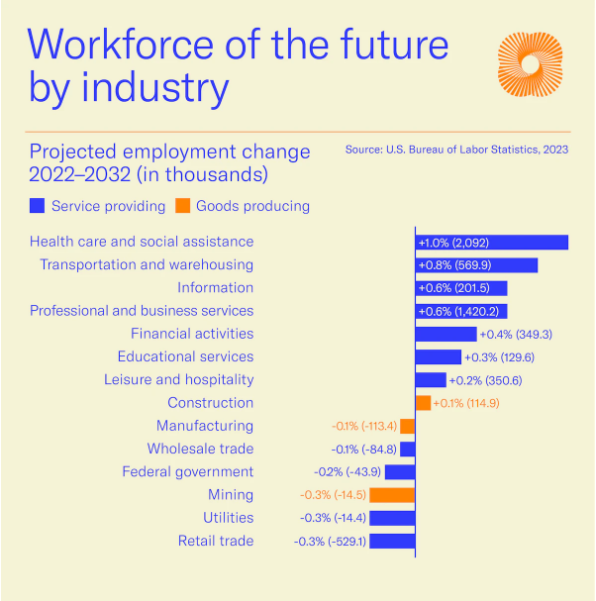
Following the drastic unemployment rates in 2020 and 2021, the Bureau of Labor Statistics released that the available jobs in 2022 had increased by 263,000, with exponential growth expected and recorded in 2023. These jobs have notably been across a few of the fastest-growing industries – healthcare, personal care and service, travel, leisure and hospitality, warehousing, IT and AI, as well as financial services and human resources. In the aftermath of the economic challenges posed by the pandemic, the healthcare sector has undeniably emerged as a beacon of growth, making allied health professionals increasingly vital to the workforce. Alongside healthcare are these other industries, growing with a contemporary job market that boasts shifting consumer needs and dynamic workforce demands. One such industry is the IT and AI sector, which is experiencing remarkable expansion driven by an increasing reliance on automation and digital solutions. Moving forward in this sector, individuals looking to remain competitive in the workforce must prioritize acquiring specialized skills that will grow with the industry such as digital literacy.
Despite the varied growth across multiple sectors, the divergent nature of workforce needs reflects our current state – a contemporary job market. In this shifting landscape, it is noted that soft skills are becoming increasingly valuable and the post-pandemic resilience seen in certain industries is undoubtedly due to an alignment of individual skill development with the evolving workforce demands. Not only is this kind of upskilling and reskilling beneficial to the workforce as a whole, but it ensures personal career advancement and an overall economic resurgence as well.
Upskilling and Reskilling
When facing the facts of our shifting workforce, employers and employees alike must focus on the most in-demand and trending workforce skills to remain competent and competitive. The U.S. Chamber says, “the majority of individuals intending to retain their roles in the near future will need to upskill and reskill.” According to Indeed as of January 2023, some of the most valuable and in-demand skills for individuals to acquire are digital and data literacy, leadership, flexibility and creativity.
Many officials report that workforce development is the key to addressing the surge in labor force numbers paired with a decline in available laborers. The Center for American Progress notes that “Governors across the country are proposing historic workforce development investments to address so-called labor shortages in critical industries such as health care, manufacturing, technology, and the public sector workforce.”
Addressing Workforce Shortages Through Training
Workforce shortages across the country are deeply rooted in a longstanding challenge – the skill gap. The Korn Ferry Institute conducted a comprehensive country-by-country study analyzing this talent shortage and how it is affecting the existing and future workforce. To combat this impact, there is an undeniable need for organizations to take responsibility to upskill and reskill their existing workforces. Looking forward, President Jean-Marc Laouchez says, “The savviest organizations are taking on the onus of training talent themselves, increasing their hiring of people straight out of school.”
The future of the U.S. workforce demands a strategic response to the challenges currently posed: an aging population, healthcare sector demands, and skills’ gaps. Upskilling and reskilling initiatives continuously prove to be a critical component in addressing these challenges as they ensure a competitive, thriving workforce that is both prepared for the future and provides meaningful contribution to sustained economic growth in the U.S. Employers and academic institutions alike must focus on workforce development and in-demand skills to shape a resilient and dynamic workforce.
The Emerge Solution
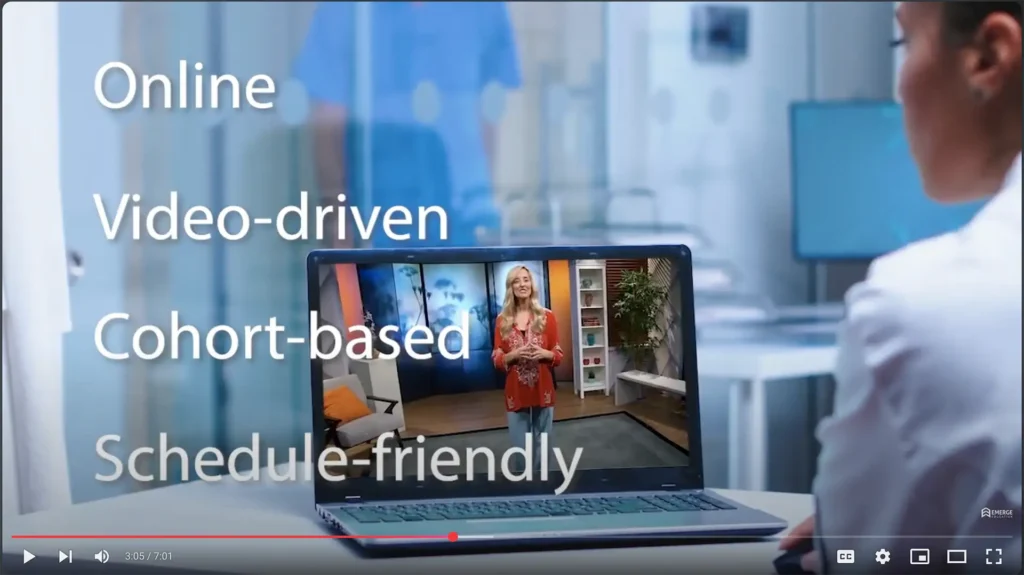
Employers and academic institutions alike can benefit from Emerge’s workforce development solutions, all of which address these vital next steps in our shifting workforce landscape. Existing employees can maintain vitality in the workforce through obtaining job-growth certificates in fields such as healthcare and professional development. For students residing in the U.S. and internationally, Emerge’s online certification programs offer the most accessible pathway to the most in-demand careers at present and in the future.