When you think about jobs that didn’t exist 20 years ago, you may think of a UX designer, SEO specialist, social media manager, or app designer. Now think about 20 years from now and the jobs that have yet to be created.
The future of work depends on the next generation of learners and their ability to adapt when changes happen. This often means gaining in-demand skills employers require, whether that be through formal education, online certifications, or self-learning through research.
In this article, we’ll discuss the changing workforce, in-demand skills, and how learners are preparing for future jobs with online learning.
The Changing Landscape of the Workforce
Employers and employees alike are forced to adapt to the changing landscape of the workforce. As we witness the rise of automation, artificial intelligence (AI), and the gig economy, those who are aware of these changes can adapt and be successful.
For example, the COVID-19 pandemic sparked the changing nature of work when many employees went remote and gained flexible working hours. For organizations, this was the best way to keep their employees (and their families) safe while retaining workers at a time when the world was in crisis. Once it was safer to go back to the office, leadership had to decide whether remote work was a permanent way of life or if returning to the office was the answer.
To this day, employee mindsets have shifted in terms of whether remote work is a privilege or a right. This one aspect of an organization has the effect of altering a top candidate’s decision when they’re choosing which company to work for or whether an employee chooses to remain in their current role. According to McKinsey’s third edition of their American Opportunity Survey, “A flexible work arrangement is a top three motivator for finding a new job.”
This illustrates the critical need for leadership to know what employees need from the workplace and vice versa.
In-Demand Skills for the Future of Work
As technology continues to evolve, employers need to hire professionals who have technical (hard) skills or upskill current employees to meet their needs. Examples of technical skills currently in demand include cybersecurity, software development, data science, anything related to AI, and others. Although technical skills have been a large focus in research and media, the emphasis on soft skills is equally, if not more, important to employers.
“Increasingly, however, emerging technologies such as generative AI are reshaping workforce demands, and employers are placing greater emphasis on “soft” skills,” states The Future Of Jobs Report 2023, “These skills allow companies to respond to change and are resistant to automation.”
This is further illustrated in the report, with organizations placing an increased importance on the following core skills for the next 5 years:
- Creative thinking
- Analytical thinking
- Technological literacy
- Curiosity and lifelong learning
- Resiliency, flexibility, and agility
The future of work depends on employees who possess these skills, as well as perhaps the biggest characteristic: the ability to adapt to change and learn new things quickly. There are various educational paths professionals can take to prepare for future roles, but online learning is steadily growing.
The Role of Online Certificates in Preparing for the Future of Work
The workforce is progressing towards a more technical and skills-based focus over the traditional higher education route. This opens more doors for online learning opportunities outside of formal college and trade school education, especially for working adults.
What Are Online Certificates?
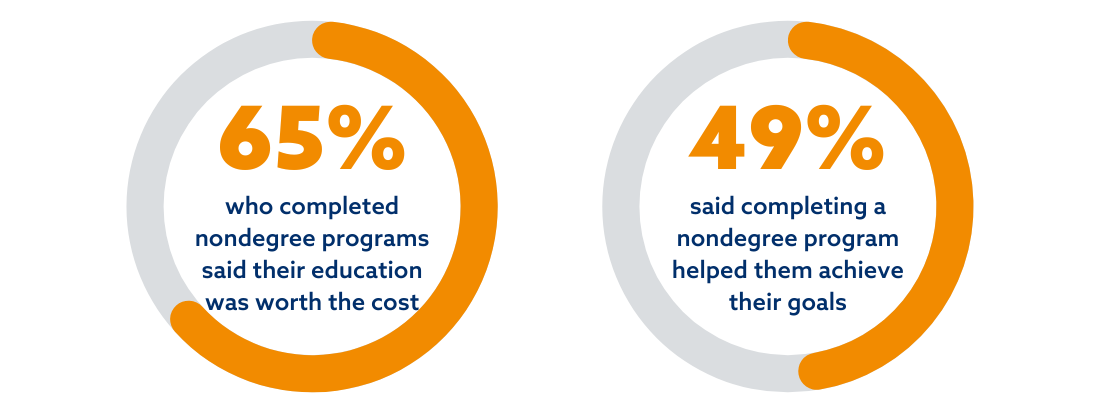
Online certificates, otherwise known as nondegree credentials, are gaining popularity among college degree holders and those with a high school degree or less, because they offer a quick way to gain in-demand skills for their current organization or pivot to a new career.
According to the 2020 Strada-Gallup Education Survey,
The Benefits of Online Certificates
Online certificates provide learners with the flexibility to learn any subject from the comfort of home. The following three benefits stand out the most when it comes to online learning:
Cost
Online certificates are an inexpensive way to take courses for fun, dive into professional development, gain new skills to change careers, and more. The average cost varies depending on the type, but they often cost significantly less than a bachelor’s or master’s degree program.
Program Length
Short-term non-credit certificates are practical for people who can’t afford to spend 2 – 4 years in school. A non-credit certificate program can be completed in as little as a few months or can take up to a year to complete. These programs are great for people who have limited time, need a lot of flexibility in their learning schedule, and want to continue their full-time jobs while continuing their education.
Greater Opportunities
People often earn non-credit certificates for job training, professional development, and personal enrichment. According to a Strada-Gallup Education Consumer Survey, “Among American adults with no postsecondary degree, those with a certificate or certification report higher levels of marketability, employment, and income—though wage outcomes vary widely across occupational fields.”
Online Certificate Programs That Prepare Learners For The Jobs of Tomorrow
The healthcare industry is one example of a workforce benefiting from online certification programs.
Healthcare employers are looking for ways to: ensure knowledge and skills, improve patient care and safety, strengthen recruitment and retention, and fill critical employee gaps. On the other hand, healthcare employees want to: enhance professional credibility, expand career opportunities, increase earning potential, and continue to learn and develop new skills.
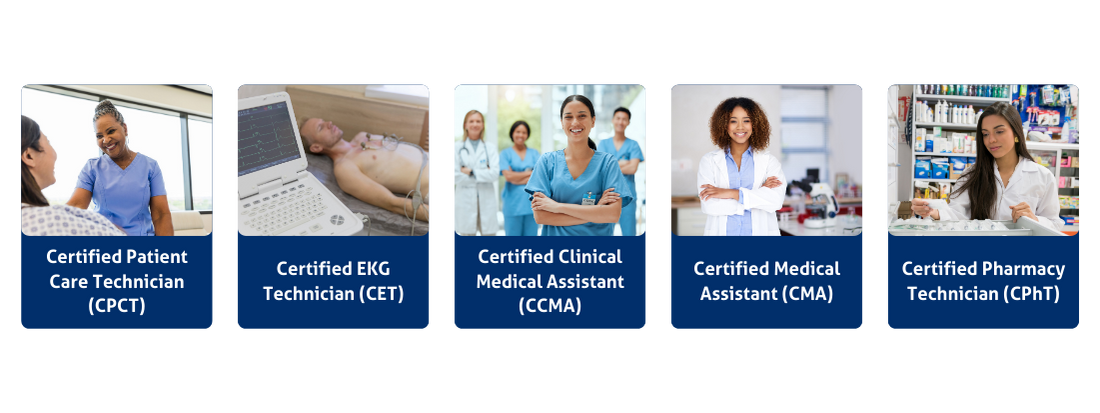
According to Indeed Career Guide, useful healthcare certifications for employers and employees to consider include:
As the workforce continues to evolve, the next generation of learners is prepared to upskill and reskill to not only complete their jobs properly but exceed in their roles. Emerge Education can help your organization provide top online certification programs for your employees’ learning needs.