In today’s rapidly evolving and competitive business landscape, organizations are increasingly recognizing the critical importance of workforce development as a strategic priority. Technological advancements and demographic shifts have created several challenges for organizational growth. Retention is just one of the hurdles most companies are now tackling, creating demand for effective workforce development initiatives that solve all of the pain points.
RETENTION CHALLENGES
The need for top-talent retention strategy remains consistent across all industries. Organizations not only need to retain over the short term but also need to retain the best talent over the long term. In fact, not doing so could cost your organization 33% of a worker’s annual salary, according to Employee Benefit News.
With an aging population, there are several positions left open with a lapse in the talent pipeline at all skill levels, which is part of the problem. However, the larger obstacle lies in an evolving workforce seeking appreciation and value, growth opportunities and work-life balance.
The Job Openings and Labor Turnover Survey (JOLTS) says that between 3 and 4.5 million employees quit their job each month. Despite economic shifts and an increase in layoffs and discharges, the number of resignations in March alone hit 3.9 million, standing strong with totals from previous months. Consequently, organizations need to develop strategies that prioritize employee development, engagement and well-being to improve retention rates amidst the great resignation.
AGING WORKFORCE AND SUCCESSION PLANNING
Previously, the aging population was mentioned in relation to retention challenges. While it would be easy to dismiss the baby boomer generation retiree gap as a prioritized strategic initiative, it would be hard to argue that a risk is not created in the potential loss of valuable institutional knowledge and skills. In tandem, organizations are unknowingly losing top talent through age-out, leaving employees without colleague mentors to help upskill and provide true knowledge transfer.
Succession planning has also become a go-to for solving aging population concerns. Though some would argue that if succession planning was such a win, many organizations would have had advanced notice of the aging workforce challenge and could have been better prepared. What we are truly facing in 2023 is the need for targeted training initiatives; workforce development solutions for high-potential employees at every level of the system. True mitigation of all skill sets and empowerment of the employee.
ADDRESSING CULTURE
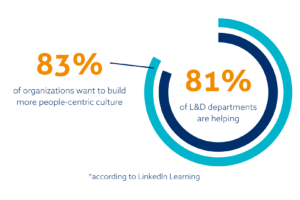
While workforce development is a necessary strategic priority, we see the demand for programs like these to marry with a strong culture for real results in retention and continued education statistics.
Entrepreneur.com quotes, “If you’ve seen a lot of people flee your company since 2020, you might have a dysfunctional culture — and I’d hazard to guess that the pandemic hasn’t caused the cultural dysfunction in your organization but likely revealed it.”
Employees today place the need for an inclusive and supportive work environment at a completely different level than the aging workforce did nearly 20 years ago. To most of the next generation, the employee culture includes things like accommodations for individuals with illnesses and disabilities, promotion of work-life balance and even wellness programs. It is no longer just about the pay, leaving open a large opportunity for employers to succeed in reimagining retention efforts and creating loyalty through learning solutions.
THE WHY IN WORKFORCE DEVELOPMENT
Retention has become a major buzzword in regard to the prioritized need for workforce development solutions. Cost savings and maximized productivity are also leveraged perks of inclusive workforce development solutions, but there is a much longer list of reasons why workforce development programs could benefit your organization strategically:
- Changing Skills Landscape: The nature of work is rapidly evolving due to technological innovation and digital transformation. Keeping pace with rapid systematic changes prepares workforces to remain competitive with necessary skills and meet employee training needs and adoption of changing job requirements.
- Improved Productivity and Efficiency: Equip employees with knowledge and skills that turn into productivity while performing tasks and streamline processes for better outcomes.
- Talent Retention and Engagement: Commit to employee growth by offering opportunities for workforce development, demonstrating loyalty that turns into reduced turnover and enhanced job satisfaction.
- Innovation and Adaptability: Nurture a culture of continuous learning and improvement in today’s rapidly changing business environment by investing in a workforce capable of driving innovation into the future.
- Future-Proofing the Organization: Proactively approach skill gap and emerging role challenges by remaining agile with an educated, talented and capable workforce.
- Enhanced Employer Branding: Be seen as an attractive employer, attracting top talent, building a talent pipeline and gaining a competitive edge.
In summary, workforce development is a strategic priority for organizations because it provides a competitive advantage, fosters business agility, enables succession planning and leadership development, drives innovation and growth, enhances employee engagement and retention, addresses skill gaps and contributes to a positive employer brand. By aligning workforce development with strategic goals, organizations can position themselves for long-term success and sustainability.