1.THE MARKET
The healthcare industry is experiencing a remarkable surge. According to Insider Intelligence, healthcare spending accounted for over 18.3% of the US GDP in 2021. More recently, the Center for Medicare and Medicaid Services estimated US national healthcare expenditure to reach $6.2 trillion by 2028. Spending is not the only indicator of growth in the healthcare sector. In January 2023, the healthcare industry was listed as one of five fastest growing industries, referencing a projected expansion of 19%. This would make healthcare the second-fastest growing sector.
The expansion comes with its own set of challenges, including a lack of skilled medical professionals and limited facilities. Yahoo Finance calls out a few of this rapid growth’s pain points: “putting complex demands on the network in terms of data rate, latency, and bandwidth, among other things.” The response has naturally yielded a demand for higher salaries amongst the workforce as an influx of new patient populations and the healthcare IT sector continues to move toward innovation and development. While challenges do exist, Emerge Education calls healthcare “recession-proof”, aiming to pinpoint solid job openings, provide reskilling and upskilling workforce development solutions and place the right people in the right place for organizational success.
2. USUAL SUSPECTS: What everyone’s already talking about 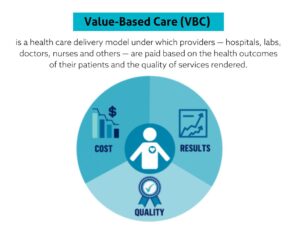
The healthcare industry’s upward trajectory is not solely fueled by population growth and increased healthcare spending. Nationally, an acceleration of the value-based care model, healthcare technology innovation, a chronic disease increase, and an aging population are all being discussed as usual suspects responsible for the more recent growth and demand. However, one thing most sources are not discussing in full is the change in deferred care rates.
McKinsey & Company state that value-based care and the increasing application of technology across the healthcare industry is likely to continue long term. Outcomes and efficiency efforts are being implemented to positively impact both patients and providers in delivery of service. To enable this transformation and the streamlined processes supporting it, technology has played a larger role than ever, enhancing data analytics behind the scenes and helping to facilitate remote care.
In our previous article, “The Progression of Workforce Development in Healthcare” we discussed the patient demographic shift, including the aging population, and how that is impacting care and demand on the workforce. What is not being discussed, is the growth of chronic disease and what factors are playing a role behind the scenes. Through the pandemic, patients made decisions to delay or even skip regular physician visits and/or medical tests for various reasons. The consequences of deferred care during this period are profoundly impacting individuals’ overall well-being and contributing to the increase in chronic disease we are seeing to date. McKinsey estimates that the cost of care could rise by approximately $7 billion by 2025, accounting for this natural progression of chronic disease. In fact, McKinsey & Company reveals that consumers who have deferred care often suffer from existing health issues or mental-health challenges, with approximately 80 percent reporting chronic conditions. This alone indicates a growing demand for accessible, patient-centered care that addresses individual needs and preferences.
3. PATIENT WELLNESS INITIATIVES
More than ever, consumers in the healthcare industry are placing emphasis on personal wellness and, according to McKinsey & Company, “prioritizing their well-being more than ever before”. This growing interest in personal health and wellness is driven by individuals seeking to proactively manage their health, prevent illnesses, and lead healthier lifestyles.
Despite this heightened focus on wellness, consumers continue to express frustration with the traditional healthcare system. By no surprise McKinsey’s research highlights persistent workforce shortages as one of the major challenges faced by incumbent health systems, only contributing to a perception among consumers that the healthcare system falls short of meeting their needs and expectations. As a result, a subset of the market has been created where consumers are actively seeking alternative approaches and solutions to address healthcare concerns. Shifts toward a consumer-centric model to meet this new demand is only fueling innovation and tech-enabled disruptors in industry evolution at scale.
While the growing focus on patient wellness presents significant opportunities for the industry, it also creates a very competitive landscape on the workforce and staffing front. Healthcare providers are now faced with several different strategic priorities on both the internal and external facets of the business to continue to scale strategically.
4. DELIVERY SHIFTS TO COME 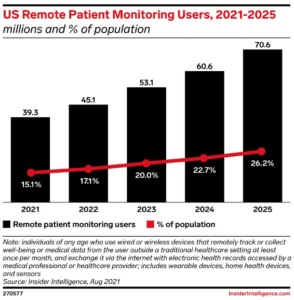
Patient wellness initiatives are also impacting delivery methodologies within the healthcare industry. There is a growing interest in preventative care and the diversification of care settings. One key aspect of this transformation is the adoption of remote patient monitoring (RPM) tools, which enable the continuous collection of real-time health data between patients and their healthcare providers. Insider Intelligence says RPM is, “One of the tools US health systems and hospitals are turning to for improved outcomes and reduced costs”. This innovative approach allows for proactive management of health conditions, early detection of potential issues, and personalized care plans.
In addition to preventative care initiatives, the expansion of care services beyond traditional healthcare facilities is reshaping the industry landscape. McKinsey & Company projects “Up to $265 billion in care services for traditional Medicare and Medicare Advantage (MA) beneficiaries could migrate from traditional facilities to the home by 2025”. Healthcare players are recognizing the need to diversify their business lines and explore adjacent segments to capitalize on emerging opportunities. Hospital systems have been expanding across the care continuum, acquiring various assets to differentiate their service and delivery methodologies and expand patient care opportunities only contributing toward healthcare industry growth and workforce demand.
5. INVESTOR INTEREST: Private Equity and Venture Capital Fueling Healthcare Growth
As providers differentiate and look to make acquisitions to expand service lines and delivery mechanisms, investor interest in the healthcare industry has been steadily increasing. According to McKinsey & Company, investors are more than doubling down in healthcare investments in the past seven years. The surge in activity reflects growing recognition and immense potential for the market.
Investors have been challenged with an extreme opportunity to capitalize on helping to diversify the already interconnected industry through existing assets and synergistic acquisition efforts that reach across multiple segments of the healthcare ecosystem. The increase in investments also supports the continued acceleration of innovative technology in the space, only fueling investor fire across multiple segments of the healthcare industry.
6. WORKFORCE DEMAND
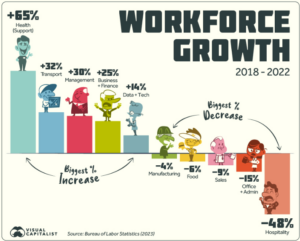
The rise of the healthcare industry is closely tied to the increased demand for a diverse range of healthcare professionals, spanning from entry-level positions to management roles. As the industry continues to evolve, the opportunities for career growth and advancement in healthcare are becoming more promising than ever before.
A notable aspect of the healthcare workforce is its upward mobility, providing employment opportunities across various skill levels and specialties. Healthcare Human Resources personnel is phrasing it, “ From minimum wage to six figures in six years,” touting the opportunity for rapid advancement in the field with appropriate training. Yet, the demand for healthcare workers is still evident. According to Reuters, the healthcare sector added 52,000 jobs, with a significant portion in ambulatory healthcare services and hospitals. Also, according to the Bureau of Labor Statistics’ (BLS) Occupational Outlook Handbook (OOH), the employment outlook for medical assistants is projected to grow by 16% — which is much faster than average — over the 10 years from 2021 to 2031. Health Support is also a field of interest, including job titles like medical assistants, care aids, orderlies, and other related roles in the allied health professional division.
The demand for healthcare workers is expected to persist and even escalate further. There are currently two job openings for every one healthcare worker available, a ratio that is projected to increase to five openings in the near future. This indicates a pressing need to attract and retain talented individuals in the healthcare industry.
To address workforce demand, it is crucial to redefine the perception of longevity and tenure in healthcare careers. Encouraging healthcare professionals to see the benefits of staying in one place of employment will be vital to retention success. Career advancement and skill development will continue to play a large role in employee satisfaction and support Human Resources hiring and staffing demands.
IN CONCLUSION
The growth in the healthcare industry is accompanied by a growing demand for healthcare professionals across all levels. The industry’s job market alone reflects this demand, as do market trends, patient wellness initiatives, deliver shifts on the horizon and investor interest.