In the high-stakes world of modern healthcare, professionals are being pushed to their limits like never before. Despite the challenges organizations already face in the wake of the aging workforce, a growing skills gap, and escalating stress levels, employee burnout and high turnover have the attention of healthcare employers requiring a solution.

This revolving door not only disrupts patient care but also strains budgets and morale. Resilience is the answer to a thriving and sustainable work environment, aiding the long-term success and well-being of healthcare professionals and institutions alike.
Understanding Healthcare Workplace Burnout
Workplace burnout is an occupation-related syndrome resulting from chronic workplace stress that has not been successfully managed. According to the American Psychological Association, burnout can be measured using validated scientific tools. It involves three dimensions:
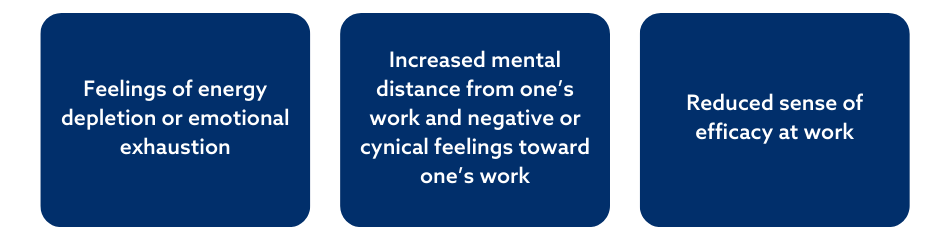
In healthcare, burnout manifests as emotional exhaustion, detachment from patients, and a sense of ineffectiveness, which in turn could compromise patient care and lead to high turnover rates. Understanding these dimensions is crucial for healthcare leaders to develop strategies that mitigate burnout, starting with resiliency.
Resiliency: The Key to Healthcare Workers Stability
Resiliency is the ability of employees to adapt and thrive in the face of challenges. Healthcare workers, however, face considerable stressors that go beyond individual-focused interventions, leaving healthcare organizations with a responsibility to make resiliency a collaborative effort.
“Your organization is only as resilient as the least-resilient individual in your workforce. Your most resilient individual is only as resilient as the organization will let them be.” – Forbes
Healthcare workers specifically encounter high-stress situations regularly; resilience can significantly reduce turnover and burnout caused by the stress of healthcare while allowing employees to maintain mental and emotional strength. The National Library of Medicine claims that “Providing access to professional development opportunities, training, and educational resources can help workers feel more confident, engaged and motivated, thereby reducing burnout.”
Healthcare leaders and organizations can do exactly that by investing in upskilling and reskilling programs such as Emerge Education’s Resiliency in Modern Healthcare program, empowering their staff with the skills and confidence needed to navigate the complexities of their roles. This not only enhances individual performance but also strengthens the overall capacity of the organization to handle crises.
Emerge Education Online Healthcare Professional Resiliency Course
To help healthcare leaders build a more resilient workforce, Emerge Education has introduced a comprehensive online resiliency course designed to equip healthcare professionals with the tools and strategies necessary to develop resilience, manage stress, and maintain their well-being. By enrolling workers in this program, healthcare organizations can take a proactive step in creating a more resilient and stable workforce.
At an organizational level, healthcare leaders can expect this program to be a key contributor in tackling the current challenges facing healthcare staffing.

Individuals can expect to reap the benefits of this course by becoming the best version of themselves: the resilient one. This resilience manifests as individualized self-awareness on how stress affects the body as well as being equipped with the necessary skills and strategies to effectively manage that stress. The program is designed with the busy healthcare worker in mind, meaning flexibility is crucial. Healthcare workers can access the expert-led training course at any time on a user-friendly learning platform.
Culture: Creating Resiliency In Modern Healthcare Program
“Organizational-level changes are necessary to foster supportive environments that prioritize individual growth and flourishing over short-term gains in areas such as patient flow and healthcare delivery.”
The American Psychiatric Association’s Center for Workplace Mental Health regards organizational culture as multifaceted and built on principles of empowerment, purpose, trust, and accountability. To foster resilience, healthcare organizations must make a company-wide commitment to support employees and address their well-being.
Promoting an open and trusting management style as well as training managers to prioritize the mental health of their teams can help support the movement toward a culture that prioritizes resilience. Between regular communication and management taking actionable steps to demonstrate their commitment to building a resilient workforce, employees feel supported and valued which leads to a more stable workforce.
Case Study: The Benefits of Resiliency In Modern Healthcare Culture
Siemens Healthineers‘ online resilience training program, offered in collaboration with The Center for Mind and Body Medicine (CMBM), yielded positive results for healthcare professionals and company employees alike. The program, focusing on stress management, self-care, and social support, equipped participants with tools to cope with the ongoing challenges of the COVID-19 pandemic.
The program boasted significant improvements in participants’ well-being. Evaluation feedback highlighted a reduction in anxiety, depression, and stress levels. Participants also reported improved self-care skills, better moods, and a positive impact on both their personal and professional lives. Notably, 85% of participants said they would recommend the program to others.
This successful initiative by Siemens Healthineers demonstrates the effectiveness of resilience training in the healthcare sector. It serves as a valuable model for other healthcare organizations seeking to support their workforce’s mental well-being in the face of ongoing challenges.
Moving Forward: Resilience Today Ensures Excellence Tomorrow
Building resilience in the healthcare workforce is not merely an optional strategy but a critical necessity in today’s high-stress industry. The pressing challenges in the healthcare workforce demand a proactive and collaborative approach to retention and employee well-being. By understanding the complex nature of workplace burnout and emphasizing resilience, healthcare organizations can create a supportive environment where employees thrive.
Emerge Education’s Resiliency in Modern Healthcare course offers practical and accessible solutions, empowering healthcare professionals with the skills and confidence needed to manage stress effectively. A resilient organizational culture plays a central role in this transformation, as demonstrated by case studies like Siemens Healthineers, where resilience training led to measurable improvements in employee well-being.
Ultimately, fostering a resilient workforce not only reduces turnover and burnout but also enhances patient care and strengthens the capacity of healthcare organizations to navigate future challenges. Through a conscious, collaborative effort at both the individual and organizational levels, the healthcare industry can thrive with a stable, healthy and resilient workforce that delivers high-quality care.